
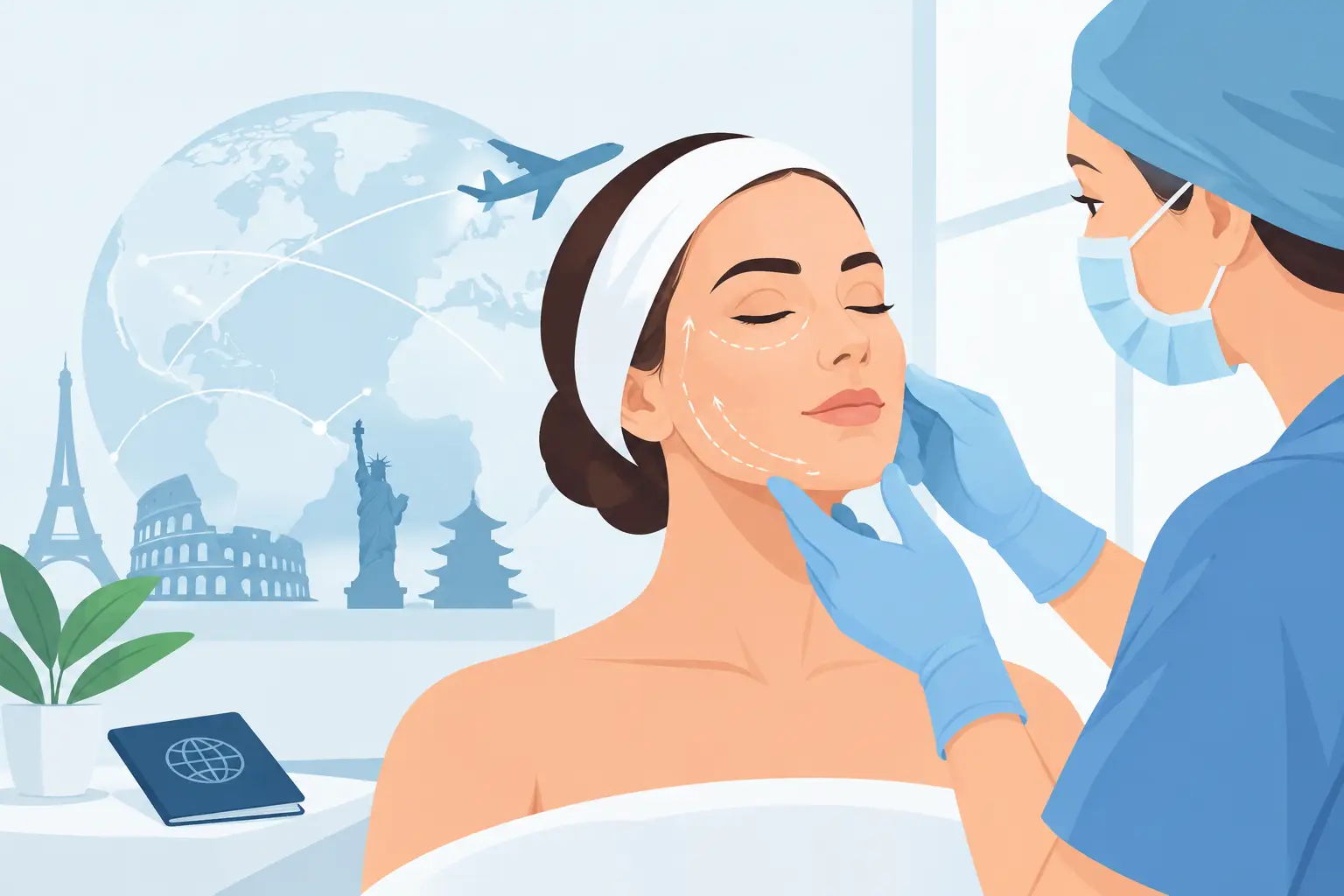
International Facelift Patient Guide for Safer Care
A facelift is not a purchase to make from a price list. It is a surgical decision that affects your appearance, comfort, health, and confidence for years. This international facelift patient guide is for patients who want the meaningful savings of surgery in Mexico while still expecting a qualified facelift specialist, a proper hospital setting, and attentive support from the first conversation through recovery.
For many American and Canadian patients, the question is not whether Mexico can offer excellent care. It can. The more useful question is whether a particular program has organized every part of the experience around safety, recovery, and clear accountability. A lower quote means little if you are left arranging transportation, aftercare, or medical details on your own.
Why Facelift Travel Requires More Planning
A facelift is different from a short outpatient treatment. Swelling, bruising, drainage care, medication schedules, and follow-up examinations all require time and a calm environment. You should not plan to leave the hospital and manage recovery in an unfamiliar hotel without clinical guidance.
The right international program treats travel as part of the medical plan. That means arranging airport assistance, private transportation, hospital admission, preoperative testing, a protected recovery period, and clear instructions for your return home. This structure is especially valuable for patients traveling alone or for adult children helping a parent arrange surgery.
Cost matters, of course. Patients often find that a premium facelift package in Mexico costs roughly one-third of comparable U.S. or Canadian pricing. But cost should be the result of lower operating expenses and favorable currency exchange, not shortcuts in surgeon training, hospital standards, anesthesia, or postoperative care.
Start With the Surgeon and Hospital
Before discussing a travel date, ask who will perform your procedure and where it will take place. A credible program should be direct about the surgeon’s qualifications, specialty focus, board certification, and experience with facelift surgery. Facelift work is not merely a cosmetic add-on. It requires judgment about facial anatomy, skin quality, neck contour, incision placement, and how much correction will look natural for your age and features.
Ask to review before-and-after photographs of patients who resemble you in age, facial structure, and degree of aging. A patient in her late 50s with loose neck skin needs a different approach than a man in his 70s with significant jowling and deeper facial descent. Photographs should show consistent lighting and meaningful angles, including the neck and profile when those areas are being treated.
Your surgery should be performed in a full-service hospital, not a casual office setting. A hospital environment offers appropriate operating-room protocols, anesthesia support, recovery monitoring, and resources should an unexpected medical need arise. Confirm that the hospital, surgeon, and anesthesia team are part of the quoted plan rather than vague promises to be finalized after you arrive.
What a Complete International Facelift Package Should Cover
A transparent quote makes it easier to compare programs fairly. Some low advertised prices cover only the surgeon’s fee, leaving hospital charges, anesthesia, garments, medications, and recovery accommodations as separate expenses. Others may not include meaningful aftercare at all.
A well-designed package should clearly explain the surgical fee, hospital costs, anesthesia, preoperative evaluation, postoperative visits, transportation assistance, and private recovery accommodations. You should also know whether a companion can stay with you, what meals or nursing support are provided, and how long you are expected to remain in Mexico before flying home.
At FaceLiftMexico, the experience is structured specifically for facelift patients: consultation coordination, surgery with a facelift specialist in a full-service hospital, private driver assistance, and recovery in a private 4-star retreat in San Miguel de Allende. This World Heritage city offers a quiet, beautiful setting rather than the pressure of recovering in a busy tourist corridor. The company has facilitated patient care since 1994, with a founder-led consultation process designed to answer questions before a patient commits to travel.
Luxury is not a substitute for medical care, but it can make recovery more comfortable. A private room, nourishing meals, help with small daily needs, and a peaceful place to rest can reduce stress during the days when you are swollen, tired, and not yet ready to be social.
Your International Facelift Patient Guide to Recovery Timing
Do not plan your surgery around a wedding, cruise, family reunion, or major work appearance. Even when healing progresses beautifully, facelift recovery has its own timetable. Most patients need to be prepared for visible swelling and bruising in the early days, with gradual improvement over several weeks. Residual swelling and incision healing can continue to refine for months.
Your surgeon will determine how long you should remain nearby after surgery. This is not the place for a one-size-fits-all promise. A patient having a facelift with neck work, eyelid surgery, fat transfer, or other procedures may need a different recovery plan than someone having a more limited lift. Your overall health, travel distance, and whether you are traveling with a companion also matter.
Before booking flights, discuss the practical details: when you can sit comfortably for travel, whether you need help with luggage, what medications must stay in your carry-on, and what symptoms require immediate attention. Book a flexible return itinerary when possible. It is far better to have breathing room than to feel pressured to fly on a day when you need another examination.
Be Honest During Your Medical Screening
Good candidates for facelift surgery are not defined only by age. Patients in their 40s through their 80s may be candidates if their health is stable and their goals are realistic. What matters is an honest medical review.
Tell the surgeon about prescription drugs, supplements, prior facial procedures, high blood pressure, diabetes, heart or lung conditions, blood-clot history, allergies, and any tendency toward poor scarring or prolonged bleeding. Nicotine use deserves particular attention because it can seriously compromise healing and skin circulation. Do not minimize smoking, vaping, nicotine gum, or patches to avoid postponing surgery. Accurate information protects you.
A responsible surgeon may ask you to obtain medical clearance or delay a procedure until a health issue is better controlled. That can feel disappointing, but it is a sign that the team is placing your wellbeing ahead of a booking calendar.
Know What to Ask Before You Deposit
A consultation should leave you more informed, not more confused. Ask who will be available after surgery, how often you will be examined, and what happens if you have a concern outside a scheduled visit. Find out how the team communicates with patients once they return to the United States or Canada.
You should also understand the financial terms. Ask what the package includes, what could create an added charge, whether financing is available, and how deposits, changes, or cancellations are handled. Financing can make an elective procedure more manageable, but it should be evaluated as carefully as the surgery itself. Choose a payment plan that fits your household budget without creating ongoing pressure during recovery.
Finally, ask about expectations. A thoughtful consultation should discuss what surgery can improve and what it cannot. A facelift can restore a more rested facial contour, improve jowls, and often refine the neck. It will not stop aging, change your underlying bone structure, or make you look like another person. The best result is usually one that looks refreshed enough that people notice you look well, not operated on.
Prepare Your Home Before You Leave
The international portion of your journey ends when you travel home, but healing continues. Arrange a comfortable sleeping space, easy meals, loose clothing that does not pull over your head, and a trusted person who can check on you if needed. Keep follow-up instructions, your medication list, and contact information available before your departure.
Give yourself permission to be quiet for a while. Recovery is not a vacation in the usual sense, even when the setting is beautiful and the care feels indulgent. It is protected time for your body to heal.
Choose a program that answers your questions with specifics, welcomes a careful review of credentials, and gives you enough support to focus on recovery. When those pieces are in place, traveling for a facelift can feel less like taking a risk and more like making a well-informed decision about how you want to be cared for.
0 comments