
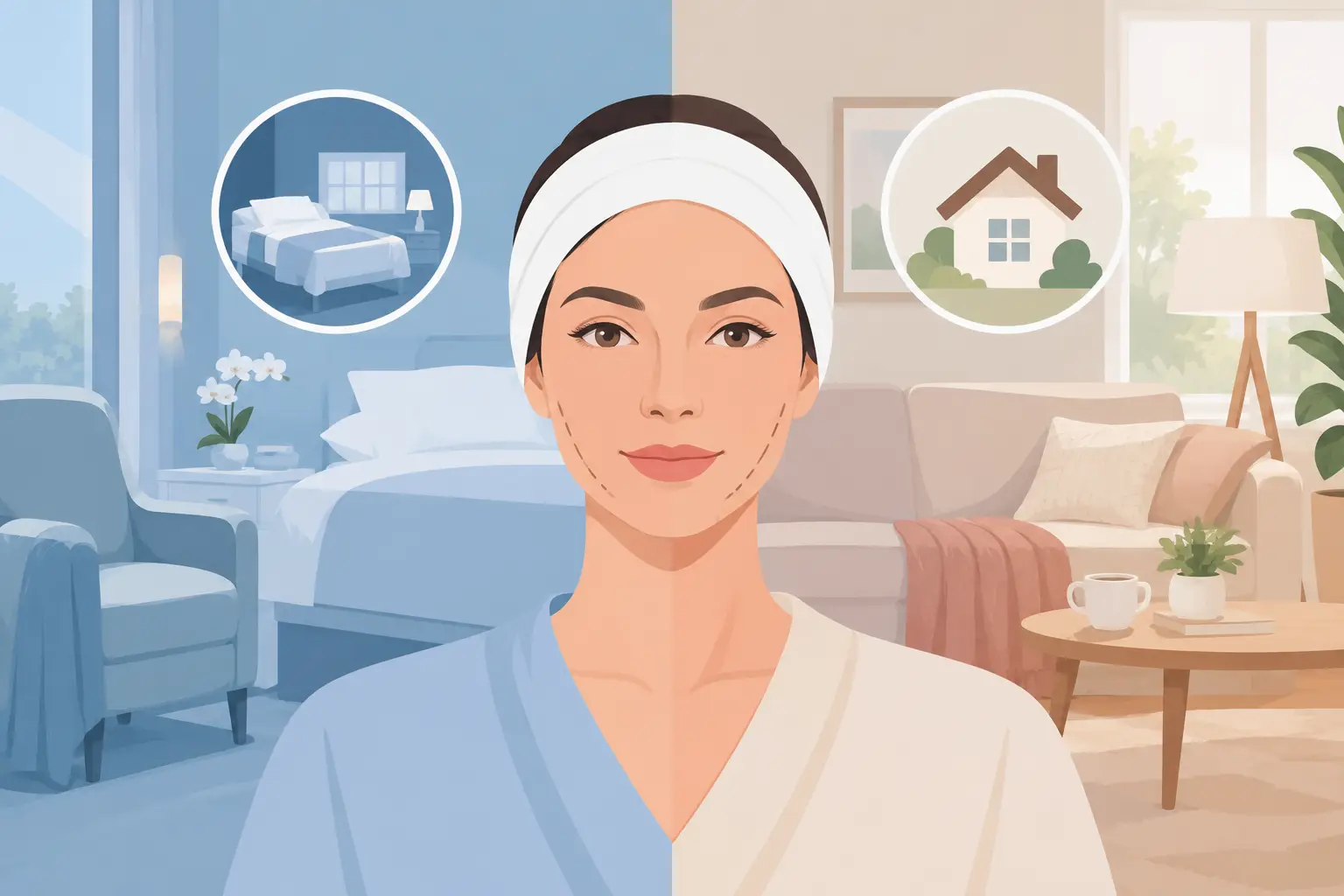
Private Recovery Versus Home Recovery After a Facelift
A facelift can be an exciting decision, but the operation is only one part of the experience. Private recovery versus home recovery is a choice that can shape how calm, comfortable, and supported you feel during the days when your face is swollen, your energy is limited, and following instructions matters most. For patients traveling for surgery, the question is not simply where you would rather sleep. It is whether your recovery setting gives you the right balance of professional oversight, privacy, practical help, and emotional ease.
Private recovery versus home recovery after facelift surgery
A private recovery stay means leaving the hospital only after your surgeon has cleared you, then recuperating in a dedicated, private accommodation with planned assistance. In a well-organized program, transportation, meals, medication reminders, follow-up appointments, and help with daily needs are coordinated around your surgical schedule.
Home recovery means returning to your own residence and relying on a spouse, family member, friend, or hired caregiver. For some patients, that familiarity is deeply comforting. For others, especially those who live alone, have busy households, or are traveling from another country, it can create more work at exactly the wrong time.
Neither option is automatically right for every patient. A healthy person with an attentive caregiver nearby may recover very well at home. Yet a structured private setting offers advantages that are difficult to recreate in a normal household, particularly during the first week after a facelift, neck lift, eyelid procedure, or combination facial surgery.
The first few days deserve more than good intentions
After surgery, patients are often surprised by how little they want to manage. You may be tired from anesthesia, adjusting to compression garments, taking prescribed medication, and trying to sleep with your head elevated. Even simple decisions such as preparing a meal, keeping track of fluids, or arranging a ride can feel unnecessarily demanding.
A private recovery environment removes those small but meaningful pressures. Meals can be prepared and brought to you. Your room can remain quiet, clean, and cool. Transportation to surgeon follow-ups is already arranged. Most importantly, you are not asking a loved one to become a full-time coordinator while you are trying to rest.
Monitoring is not the same as being in a hospital
A reputable facelift program performs surgery in a full-service hospital and discharges patients according to the surgeon’s protocol. A private recovery retreat is not a substitute for a hospital, nor should it present itself as one. Its role begins after discharge: creating a controlled, comfortable setting where postoperative instructions are easier to follow and support is close at hand.
That distinction matters. Patients should know who is responsible for clinical decisions, how the surgeon handles scheduled follow-ups, and what the plan is if a concern arises. Clear communication between the hospital, surgeon, recovery staff, and patient is one of the strongest safeguards in any surgical journey.
Practical support protects rest
At home, a caregiver may be willing but unprepared. They may need to work, drive children to school, cook, manage pets, or leave the house for errands. You may also feel guilty asking for help. Those ordinary responsibilities can turn a peaceful recovery plan into an exhausting one.
In a private retreat, the purpose of the environment is recovery. You can concentrate on sleeping, walking gently as directed, nourishing your body, and attending appointments. You do not have to see visitors, explain bruising to neighbors, or keep your kitchen running. That level of discretion is especially valuable for patients who prefer their cosmetic procedure to remain private.
When home recovery can be the better fit
Home has real advantages when it is truly set up for recovery. Some patients have a quiet bedroom on the main floor, a dependable caregiver, prepared meals, and easy access to their surgeon. They sleep better in familiar surroundings and do not want to be away from a partner or pet. For a local patient with a strong support system, returning home may be entirely reasonable.
The key is to be honest about what “support” means. A loved one who checks in twice a day is different from someone available overnight. A stocked refrigerator is helpful, but it does not solve transportation to postoperative visits. Living close to the surgeon is not the same as having a clear plan for questions outside office hours.
Home recovery also becomes more complicated after medical travel. Flying or taking a long drive too soon after surgery is not simply inconvenient. It can be uncomfortable, disruptive, and contrary to your surgeon’s recommended timeline. Patients traveling from the United States or Canada should plan to remain near their surgical team until they are cleared for onward travel.
Cost should be measured beyond the room rate
A private recovery stay has a visible cost, while home recovery can appear free. That comparison is often incomplete. Recovering at home may require a hotel near the surgical center, ride services, grocery delivery, prepared food, a temporary caregiver, and time away from work for a family member. It may also involve changing travel reservations if you are not ready to leave when expected.
A bundled recovery package makes the total picture easier to understand. Ask exactly what is included: private airport transportation assistance, hospital arrangements, accommodations, meals, follow-up transportation, recovery support, and coordination with the surgeon. The best programs are specific rather than vague. You should not have to guess whether an essential part of your recovery has been accounted for.
For many facelift patients, especially those paying out of pocket, value is not about choosing the lowest number. It is about knowing that a lower surgical price has not shifted hidden responsibilities onto you during recovery. Financing may also help patients plan for the complete experience rather than separating surgery from the care required afterward.
What private recovery can offer medical travelers
Mexico has become a practical option for patients who want experienced facial surgery at substantially lower pricing than they may find in the United States or Canada. But surgical credentials and hospital standards should always come before scenery or savings. A proper program begins with consultation, surgeon selection, and a transparent discussion of what is included.
For a facelift-focused journey, a private recovery retreat can make the travel portion feel far less intimidating. At FaceLiftMexico, the model is designed around hospital-based surgery with a board-certified facelift surgeon specialist, coordinated transportation, and postoperative recovery in a private four-star retreat in San Miguel de Allende. This World Heritage city offers privacy and beauty, but the essential benefit is operational: patients remain close enough for planned follow-up while their everyday needs are handled with care.
The founder-led consultation process can also be reassuring for travelers who do not want to navigate an unfamiliar medical system alone. Before committing, patients should ask direct questions about the surgeon’s training, hospital facility, anesthesia team, aftercare schedule, length of stay, and who to contact with concerns. Good answers should be clear, not pressured.
Choose the setting that makes it easiest to follow instructions
The most useful question is not, “Would I rather be home?” It is, “Where will I be best able to heal without avoidable stress?” Consider your household, your available caregiver, the distance from your surgeon, your comfort with travel, and whether you want your procedure to remain discreet.
Private recovery is often the stronger choice for patients traveling alone, combining procedures, living in a busy home, or wanting hands-on logistical support. Home recovery may suit a local patient whose environment is calm and whose caregiver can reliably assist. Your surgeon’s recommendations should guide the final decision, especially if your health history or procedure plan calls for additional observation.
Give your recovery the same careful attention you give your surgeon. A peaceful room, a reliable ride, a nourishing meal, and someone who understands the plan can make the days after a facelift feel less like a disruption and more like protected time to heal.
0 comments