
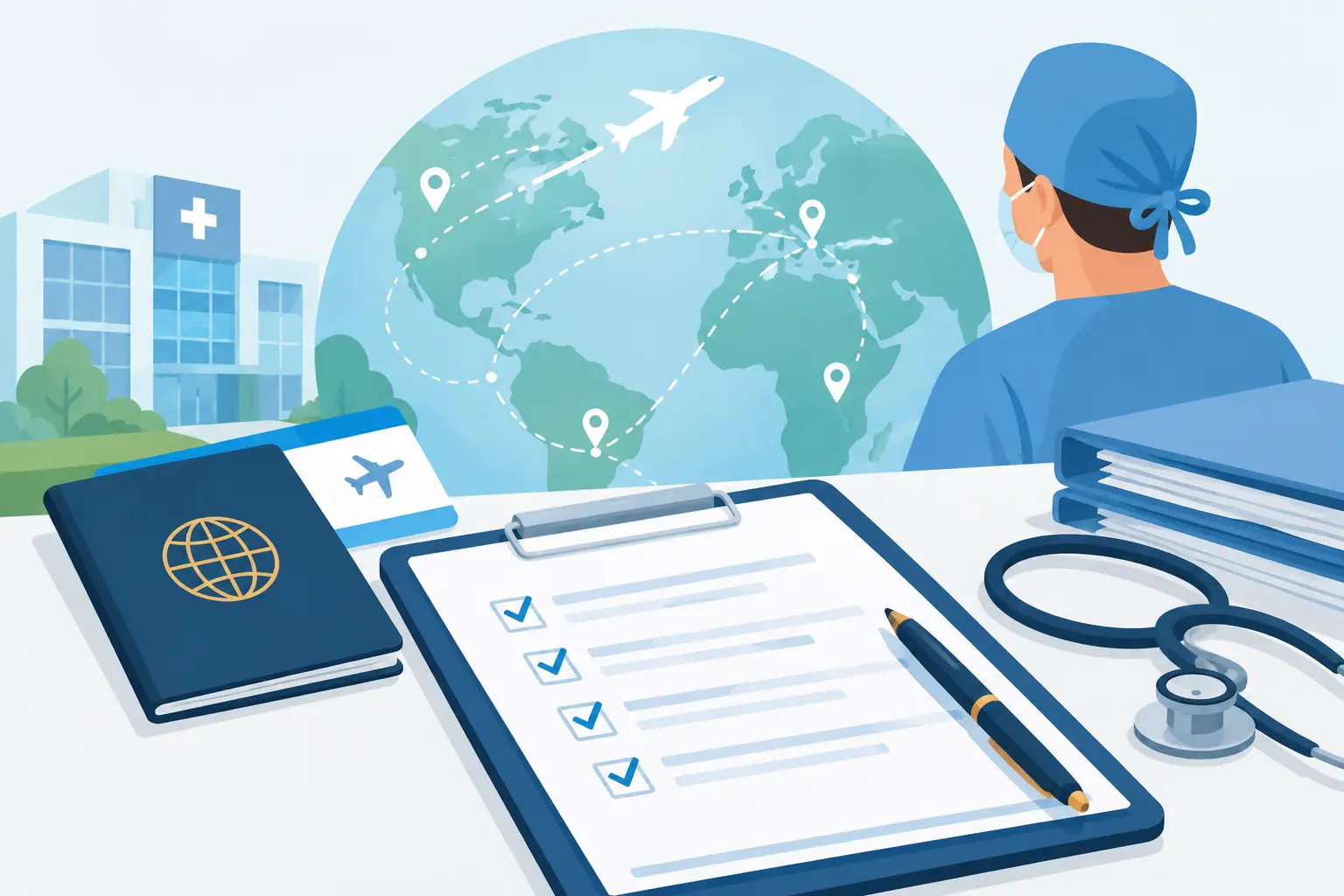
A Guide to International Surgery Paperwork
A facelift abroad should feel carefully planned long before you board a plane. This guide to international surgery paperwork explains what U.S. and Canadian patients typically need to prepare, why each document matters, and how a well-organized surgical program can remove much of the uncertainty from the process.
For elective facial surgery in Mexico, paperwork is not simply an administrative task. Your passport, health history, surgical consent, payment records, and travel details all support a safer, calmer experience. The goal is not to overwhelm you with forms. It is to make sure your surgeon and care team have accurate information, your travel is properly arranged, and you can focus your energy on recovery.
Start With Your Passport and Travel Details
Your passport is the first essential document for international cosmetic surgery. U.S. and Canadian citizens traveling by air into Mexico need a valid passport to enter and to return home. Check the expiration date early. While Mexico may permit entry under rules that differ from other countries, airlines and travel requirements can change, and a passport with several months of remaining validity is usually the most comfortable choice.
Keep a photocopy of your passport in a separate bag and save a secure digital copy that you can access if the original is misplaced. Your recovery coordinator should also have your complete arrival information, including flight number, airline, date, time, and the name of any companion traveling with you. This allows private airport transportation to be arranged without last-minute confusion.
Travel paperwork may also include proof of your return flight, hotel or recovery accommodation details, and emergency contact information. If you are traveling with a spouse, friend, or adult child, make sure that person has the same itinerary and knows whom to contact at the hospital and recovery retreat.
Medical Records Your Surgeon Needs Before Surgery
The most meaningful paperwork is medical. A facelift is a sophisticated procedure, and your surgeon needs a complete, honest picture of your health before recommending surgery. This protects you and helps create a surgical plan that fits your anatomy, goals, medical history, and recovery needs.
Prepare a current list of medications, including prescription drugs, over-the-counter pain relievers, vitamins, herbal products, and supplements. Some items can increase bleeding risk or interact with anesthesia, even if they seem harmless. Do not leave out hormone therapy, weight-loss medications, sleep aids, aspirin, blood thinners, or nicotine products.
Your health history should include prior surgeries, allergies, chronic conditions, history of excessive bleeding or blood clots, previous reactions to anesthesia, and any recent illness. If you have high blood pressure, diabetes, heart disease, sleep apnea, an autoimmune condition, or a history of smoking, disclose it clearly. These details do not automatically prevent facelift surgery, but they may affect timing, medical clearance, anesthesia planning, or the type of recovery support recommended.
Many patients will need recent laboratory work and, depending on age and health history, additional testing such as an EKG or clearance from their primary physician or specialist. Requirements vary. A healthy 48-year-old and an 80-year-old patient with managed hypertension should not expect identical preoperative instructions. Complete requested testing promptly so the surgical team can review the results before you travel.
Bring copies of your test results and medical clearance with you, even if you have already sent them electronically. Paper copies are useful if your phone fails, an attachment is difficult to retrieve, or a hospital clinician needs to review a report in person.
Understanding Surgical Consent Forms
Consent forms deserve your full attention. They document that you understand the procedure, anticipated benefits, alternatives, possible complications, anesthesia, recovery requirements, and the specific areas your surgeon plans to address. A responsible surgical team does not rush this conversation.
For facelift patients, consent may cover the facelift itself along with any planned procedures such as a neck lift, eyelid surgery, brow lift, fat grafting, laser treatment, or facial fat removal. Each procedure has its own considerations. Ask which procedures are included in your plan, which are optional, and whether combining them changes your recovery timeline.
You may also sign consent related to photography. Before-and-after images are a valuable way to understand surgical outcomes, but you should know how your images may be used and whether identifying features will be protected. Ask questions before signing. You should never feel pressured to approve a use you do not understand.
There may also be hospital admission forms, anesthesia consent, privacy acknowledgments, and policies covering postoperative care. Review these while you are rested, not on the morning of surgery. If a form feels unclear, request an explanation in plain language. A quality program welcomes informed questions.
Financial Paperwork Should Be Clear Before You Travel
Price is one reason many Americans and Canadians consider facelift surgery in Mexico. A properly structured package can offer substantial savings compared with U.S. and Canadian pricing while maintaining a full-service hospital setting, an experienced facelift specialist, and attentive recovery care. But savings should never come from vague financial terms.
Request a written breakdown of what is included. For a comprehensive surgical experience, this may cover surgeon fees, hospital and operating room charges, anesthesia, preoperative testing, medications, private transportation assistance, recovery accommodations, nursing support, and follow-up care. It should also state what is not included, such as flights, meals beyond those provided, companion costs, or unrelated medical needs.
Read the deposit, cancellation, rescheduling, and refund terms before making payment. International travel can be affected by family emergencies, medical clearance issues, or airline disruptions. Knowing the policy in advance prevents difficult surprises later.
If you are using financing, review the financing agreement separately from the surgical agreement. Understand the payment schedule, interest or promotional terms, fees, and what happens if your surgery date changes. Financing can make a premium facelift experience more accessible, but it should be chosen with the same care you give to selecting your surgeon.
Keep receipts, invoices, and payment confirmations in one folder. Some patients also notify their bank or credit card company that they will be making an international payment or traveling to Mexico. This simple step can prevent a fraud alert from delaying a legitimate transaction.
Your Recovery Plan Is Part of the Paperwork
A facelift is not a procedure to arrange as a quick trip. You need a documented recovery plan that covers where you will stay, who will assist you, when you will see your surgeon again, and when it is appropriate to fly home. The right schedule depends on your procedure and healing progress, so follow your surgeon’s recommendation rather than planning around the cheapest return flight.
At FaceLiftMexico, the experience is designed around this reality. Patients receive a founder-led consultation process, surgery in a full-service hospital with a board-certified facelift surgeon specialist, transportation assistance, and private 4-star recovery accommodations in San Miguel de Allende. Having the hospital, recovery environment, and support team organized in advance means fewer moving parts for a patient who should be resting.
Your paperwork should include post-operative instructions, a list of prescribed medications, follow-up appointment times, emergency contact information, and guidance for your companion. Keep these documents accessible throughout your stay. If you are returning home alone after your recovery period, confirm any airline assistance you may need before your departure date.
A Simple Way to Organize Your Surgery Folder
Use one physical folder and one secure digital folder. Place your passport copies, itinerary, medical records, medication list, test results, surgical plan, consent documents, payment confirmations, insurance information if applicable, emergency contacts, and recovery instructions in both places. Your companion should know where the physical folder is and how to reach your care coordinator.
Avoid carrying original documents that are not needed. For example, a copy of a medical record is usually more practical than an original. Keep your passport, wallet, phone, medications, and key health documents in your carry-on bag, never in checked luggage.
The best paperwork process feels almost invisible by the time you arrive. When every form has been reviewed, every medical detail has been shared, and every transfer and recovery date has been confirmed, you are free to arrive with confidence and give your attention to the result you came for.
0 comments