
Top Facelift Travel Mistakes and How to Avoid Them
A facelift patient should not be choosing a surgical destination the way they choose a beach vacation. The most costly top facelift travel mistakes usually happen before the suitcase is packed: selecting a surgeon without enough verification, booking a return flight too soon, or treating recovery as an afterthought. A beautiful result requires excellent surgery, but it also depends on the planning around it.
For patients traveling from the United States or Canada, Mexico can offer exceptional value and highly qualified care. The difference between a confident, well-supported experience and a stressful one is knowing what to arrange before you leave home.
Top Facelift Travel Mistakes to Avoid
Choosing a price before choosing a surgeon
A surprisingly low price can get attention, but it should never be the reason you commit to facelift surgery. A facelift is not a standardized product. Surgical technique, operating facility, anesthesia, follow-up, and the surgeon’s experience with facial anatomy all affect both safety and the quality of the result.
Ask who will perform your surgery, what board certification is held, where the procedure will take place, and who will monitor you during recovery. You should be able to speak directly with a qualified coordinator and have a meaningful consultation with the surgeon before making a final decision. Before-and-after photographs should reflect real facelift patients, not only highly filtered images or unrelated cosmetic procedures.
A lower price can be a genuine advantage when overhead is lower than in the U.S. or Canada. It becomes a warning sign when the provider cannot clearly explain hospital standards, credentials, anesthesia arrangements, and postoperative care.
Booking surgery in a clinic that cannot support a real recovery
Facelift surgery is often described as outpatient surgery, but that does not mean recovery is casual. During the first days, patients need a clean, quiet environment, help with meals and medications, transportation to follow-up appointments, and immediate access to professional guidance if swelling, discomfort, or a concern arises.
One of the biggest mistakes is assuming a hotel room alone is a recovery plan. You may not feel ready to navigate a new city, arrange meals, or find a pharmacy while you are tired and healing. A recovery retreat or private accommodation with experienced support removes those unnecessary demands.
Look closely at what happens after you leave the hospital. Is there a scheduled postoperative visit? Is transportation provided? Is there an English-speaking team available? Are you left alone overnight immediately after surgery? Details that seem small before surgery can feel very significant when you are recovering.
Flying home too early
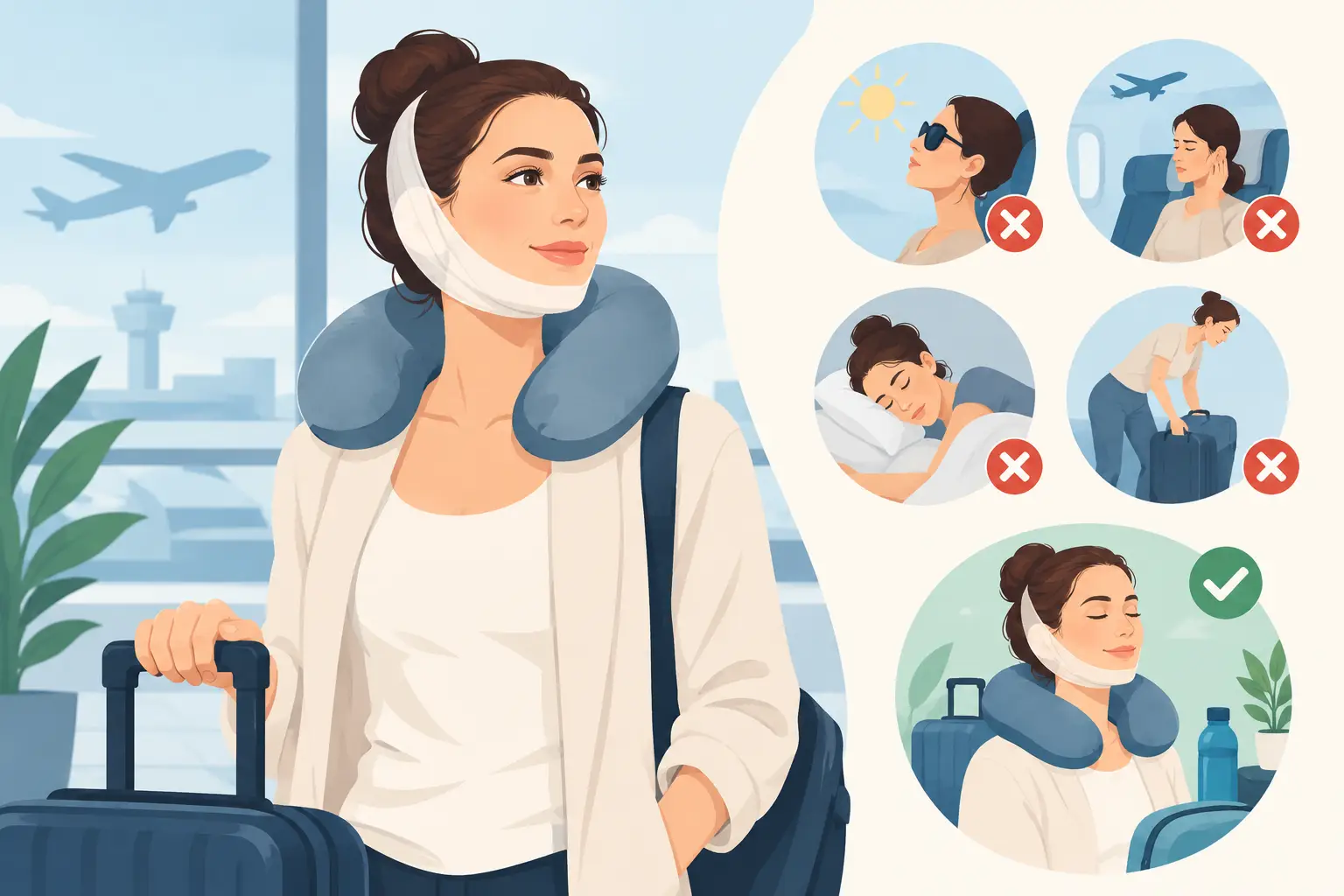
The return flight is not merely a calendar item. It should be based on your surgeon’s clearance, your procedure, your healing progress, and your ability to travel comfortably and safely. Swelling and bruising are expected after facelift surgery, and the first several days require rest, elevation, and close observation.
Patients sometimes book a bargain airfare before receiving a personalized surgical timeline. That can create pressure to leave before the surgeon is comfortable clearing them for travel. It may also leave no room for a follow-up visit or an extra recovery day if needed.
Build flexibility into your plans. Schedule enough time in Mexico for surgery, early recovery, and a final evaluation. Purchase changeable airfare when possible, and do not plan a demanding connection, a long drive, or an important social event immediately after arriving home.
Assuming you can recover alone
Some patients prefer privacy and do not want to ask a spouse, adult child, or friend to travel with them. That is understandable. But privacy should not mean isolation.
A companion can provide reassurance and practical help, yet not every companion is prepared for the responsibility of supporting a surgical patient. If you travel alone, a structured recovery program with attentive staff can be the better choice. If you bring someone, make sure they understand that recovery is for rest, not sightseeing or entertaining.
The goal is not to create dependence. It is to ensure that someone qualified and reachable is paying attention during the period when you need it most.
Withholding medical information or changing medications on your own
Patients occasionally minimize a health condition because they fear being declined for surgery. Others stop prescribed medications, supplements, or hormone treatments without instruction in an effort to prepare. Both choices can create avoidable risk.
Your surgical team needs a complete medical history, including prior surgeries, allergies, blood pressure concerns, smoking or nicotine use, medications, vitamins, and herbal supplements. Be candid about alcohol use and any history of slow healing, bleeding, or anesthesia complications. This information helps the surgeon decide whether you are a suitable candidate and how to plan your care safely.
Do not stop or start medications unless your surgeon and prescribing doctor advise you to do so. Follow preoperative instructions precisely, especially regarding nicotine, aspirin-containing products, anti-inflammatory medications, and supplements that may affect bleeding.
Packing and planning like this is a vacation
San Miguel de Allende is a remarkable place to recover: peaceful, beautiful, and rich with history. Still, the days after a facelift are not the time to fill an itinerary with restaurants, shopping, museums, or long walks on cobblestone streets.
Pack comfortable front-button or zip-front clothing so you do not pull garments over your head. Bring sunglasses, any approved personal medications in their original containers, a copy of key medical information, and a small carry-on with your essentials. Avoid heavy luggage. Arrange for help with bags at the airport and during transfers.
You should also prepare your home before departure. Stock easy meals, clean bedding, pillows that help you sleep elevated, and loose clothing. Let a trusted person know when you will return, even if you prefer to keep your surgery private from most people.
Ignoring the total cost of care
Comparing a surgical quote with a single line item from another provider rarely gives an accurate picture. A lower surgical fee can become expensive if it excludes anesthesia, hospital charges, medications, garments, airport transfers, follow-up care, or recovery accommodations.
Request a clear written explanation of what is included and what may cost extra. You should understand the deposit, payment schedule, cancellation policy, and whether financing is available before committing. It is also wise to budget for flexible flights, a companion’s travel, gratuities where appropriate, and a few extra recovery days.
At FaceLiftMexico, the value of a coordinated package is that patients are not left to assemble the hospital, driver, accommodations, and recovery support on their own. A structured experience can make costs more predictable while allowing the patient to focus on healing rather than logistics.
Failing to plan for discretion after you get home
Many patients travel for surgery because they want privacy. Yet they return home without a plan for the visible recovery period. Bruising and swelling can be noticeable, and final refinement takes time. Trying to explain your appearance at work or attending a family gathering too soon adds stress when rest should be the priority.
Give yourself more time away from public-facing responsibilities than you think you may need. Arrange remote work if that is realistic, postpone photographs and major events, and consider a simple explanation in advance if someone asks. You do not owe anyone details about your medical choices.
A Better Way to Plan Facelift Travel
The right medical tourism experience should feel carefully managed, not improvised. Start with a consultation that addresses your goals, health history, surgical options, and realistic recovery timeline. Confirm the surgeon’s qualifications and hospital setting. Then build travel around the medical plan, rather than asking the medical plan to fit a discounted flight.
There is no prize for recovering quickly or traveling with the smallest possible budget. The best plan is the one that gives you qualified surgical care, attentive monitoring, comfortable accommodations, and enough time to return home with confidence. Your facelift is a personal investment. Give the journey the same care you expect from the result.
0 comments