
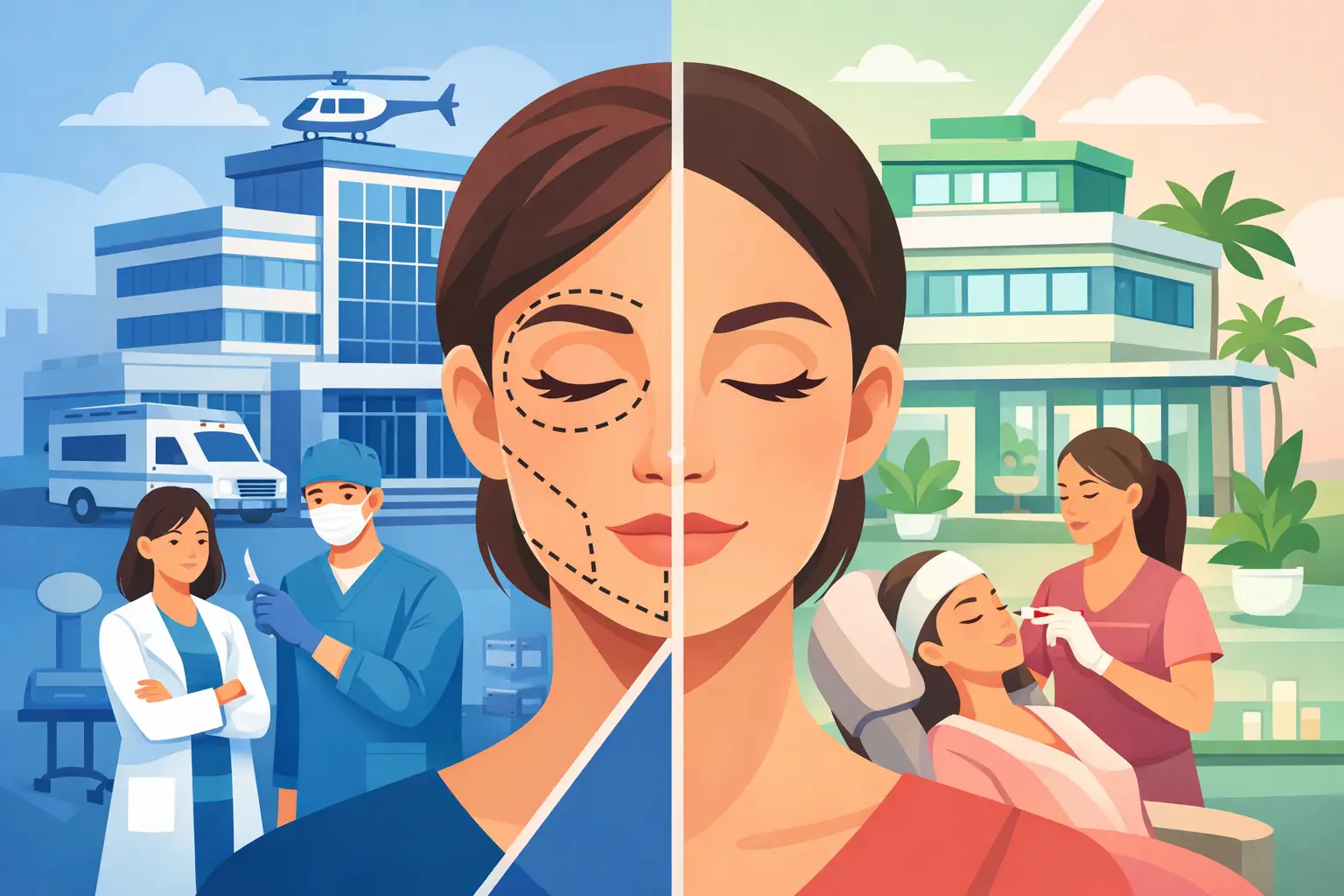
Hospital Facelift vs Clinic Facelift Compared
A facelift quote may look straightforward until you ask where the surgery will actually take place. The difference between a hospital facelift vs clinic facelift can affect more than the price. It can shape your anesthesia options, emergency preparedness, overnight care, privacy, and how supported you feel during the first critical days of recovery.
For many healthy patients, both settings may be appropriate. But a facelift is a significant operation, not a quick beauty treatment. The right choice depends on your procedure plan, medical history, travel needs, and the standards behind the facility – not simply the name on the building.
Hospital Facelift vs Clinic Facelift: The Core Difference
A full-service hospital is built to handle a wide range of medical situations. It generally has operating rooms, recovery areas, laboratory services, imaging, pharmacy support, emergency equipment, and a broader clinical team available under one roof. A clinic or outpatient surgical center is usually designed for planned same-day procedures, often with a narrower scope of services.
That does not mean every clinic is unsafe or every hospital is automatically superior. An accredited ambulatory surgery center with qualified anesthesia professionals, trained recovery staff, and clear transfer arrangements can be a suitable setting for carefully selected facelift patients. At the same time, a beautiful clinic with impressive marketing is not a substitute for verifying credentials, staffing, anesthesia protocols, and emergency capability.
The practical question is this: if your surgery or recovery does not follow the expected path, what resources are immediately available? A hospital environment provides more layers of support without requiring a transfer to another facility.
Why the Surgical Setting Matters for Facelift Patients
Modern facelift surgery can be remarkably refined. Techniques may address the deeper facial structures, jawline, neck, cheeks, or eyelids with results that look rested rather than overdone. Yet even when the procedure is elective, it involves anesthesia, incisions, careful blood-pressure management, and close observation afterward.
The early recovery period is particularly important. Swelling and bruising are expected. Discomfort can be managed. But an experienced medical team must also watch for less common concerns such as bleeding, nausea, blood-pressure changes, breathing issues, or a hematoma, which is a collection of blood beneath the skin that may require prompt attention.
In a hospital, the surgeon and anesthesia team work within a system designed for monitoring and escalation of care. Depending on the treatment plan, a patient may have access to extended observation or an overnight stay rather than being expected to leave soon after surgery. This can be especially reassuring for patients having a more comprehensive facelift, combined facial procedures, or surgery later in life.
A clinic facelift is often structured around efficient same-day discharge. That can be appealing to a healthy local patient undergoing a limited procedure with a responsible adult available at home. It may be less appealing for a traveler who does not know the area, has no local support network, or wants greater medical oversight immediately after surgery.
Anesthesia Is More Than a Line Item
When comparing estimates, ask who will administer anesthesia and remain responsible for you during surgery. A qualified anesthesia professional should conduct a preoperative evaluation, review your health history and medications, monitor you continuously, and manage your recovery from anesthesia.
Some smaller procedures can be done under local anesthesia with sedation, while a full facelift may call for deeper sedation or general anesthesia. Neither approach is universally right. The safest approach is the one selected for your anatomy, procedure scope, health profile, and surgeon’s plan.
A lower quote can sometimes reflect a shorter facility stay or fewer included services. That is why a meaningful comparison goes beyond the surgeon’s fee. You should understand what type of anesthesia is planned, who provides it, whether preoperative testing is included, and what happens if you need additional observation.
When a Clinic May Be a Reasonable Choice
A reputable clinic or accredited outpatient center can be appropriate when the procedure is limited, the patient is medically low risk, the anesthesia plan is suitable, and the facility has strong standards. A local patient may also value the convenience of returning home the same day with a capable caregiver nearby.
Before choosing this route, confirm that the surgeon has specific facelift experience, not just a broad cosmetic practice. Ask about facility accreditation or licensing, the credentials of the anesthesia provider, recovery-room staffing, and the plan for an unexpected complication. You should also know exactly who will answer a concern after hours.
Patients should be wary of decisions made solely around speed or a dramatic price difference. A shorter stay is not automatically better, and a clinic package is not truly less expensive if it leaves out anesthesia, medications, follow-up, transportation, or recovery assistance you will need anyway.
When a Hospital Setting Deserves Strong Consideration
A hospital facelift may be the more comfortable choice for patients who want comprehensive support around a substantial procedure. It is often worth considering if you are combining a facelift with neck surgery, eyelid surgery, fat transfer, or other facial rejuvenation treatments. The same is true if you have medical conditions that require closer evaluation, take medications that affect surgery, or simply prefer the reassurance of a higher level of facility capability.
International patients have additional considerations. After surgery, you should not be navigating unfamiliar traffic, arranging rides, or trying to solve medication questions from a hotel room. A responsible medical tourism program coordinates the parts of recovery that are easy to underestimate before surgery: airport transportation, hospital admission, nurse-directed instructions, physician follow-up, meals, comfortable lodging, and a quiet place to heal.
For patients traveling to Mexico, the hospital setting can also remove a major source of uncertainty. You know where the operation will occur, who is responsible for your care, and where you will be monitored before moving into the recovery phase.
Comfort and Safety Work Best Together
Hospital care does not have to mean a cold or impersonal experience. The best programs separate the surgical and recovery needs thoughtfully. Surgery takes place in a full-service hospital, where medical resources are readily available. After discharge, recovery continues in a private, supportive setting where the patient can rest without household demands or the pressure to immediately travel home.
This combination is especially valuable after facial surgery. You need calm, hydration, nourishing food, assistance with daily details, and clear guidance from people who understand the recovery timeline. You also need to be close enough to your surgical team for scheduled checkups and quick evaluation if something feels unusual.
FaceLiftMexico has built this kind of structured experience around facelift patients for more than 30 years: surgery in a full-service hospital, private driver assistance, and recovery in a private 4-star retreat in San Miguel de Allende. The purpose is not to make surgery feel casual. It is to make a serious medical experience feel organized, personal, and well cared for.
How to Compare Quotes Without Missing the Real Costs
Request an itemized explanation before you compare a hospital and a clinic. A complete quote should clarify the surgeon’s fee, anesthesia, operating room or hospital charges, preoperative tests, medications, compression garments if needed, follow-up visits, and any overnight monitoring. If you are traveling, add transportation, accommodations, meals, and the cost of changing flights should you need extra recovery time.
The lowest initial number is rarely the most useful number. What matters is the total cost of receiving appropriate care from consultation through follow-up. For U.S. and Canadian patients, Mexico can offer substantial savings even with hospital-based surgery, experienced specialist care, and a recovery package included. Financing can also make a carefully planned procedure more manageable without forcing a decision based on the cheapest setting.
Questions That Lead to a Better Decision
Ask your surgeon where the operation will take place and why that setting is right for your specific case. Ask whether the facility is licensed, what emergency resources are onsite, who provides anesthesia, and whether an overnight stay is available or recommended. If you are traveling, ask who will meet you after surgery, where you will recover, and how you can reach the team outside regular office hours.
Also ask a question many patients overlook: how often does this surgeon perform facelifts? A board-certified surgeon with deep, procedure-specific experience and a well-organized facility team is more meaningful than a generic promise of luxury or a low advertised price.
Your facelift should be planned around the level of care that lets you recover with confidence, not around the fastest discharge time. Choose the setting that gives your surgeon the proper resources and gives you the space, support, and peace of mind to focus on healing.
5 comments