
Can Facelift Scars Be Hidden? What to Expect
A well-performed facelift should make people notice a fresher, more rested face, not evidence of surgery. So, can facelift scars be hidden? In most cases, yes: facelift incisions are deliberately placed in natural facial contours, within the hairline, and around the ear where they are difficult to detect once mature. But “hidden” does not mean a scar never exists. It means the surgeon plans every incision with discretion in mind and gives healing the time it requires.
For patients considering surgery, an honest discussion about scars is part of choosing the right facelift specialist. The goal is not to promise an impossible scar-free result. The goal is a naturally rejuvenated appearance with scars that fade, flatten, and blend into locations most people will never see.
Can Facelift Scars Be Hidden? The Honest Answer
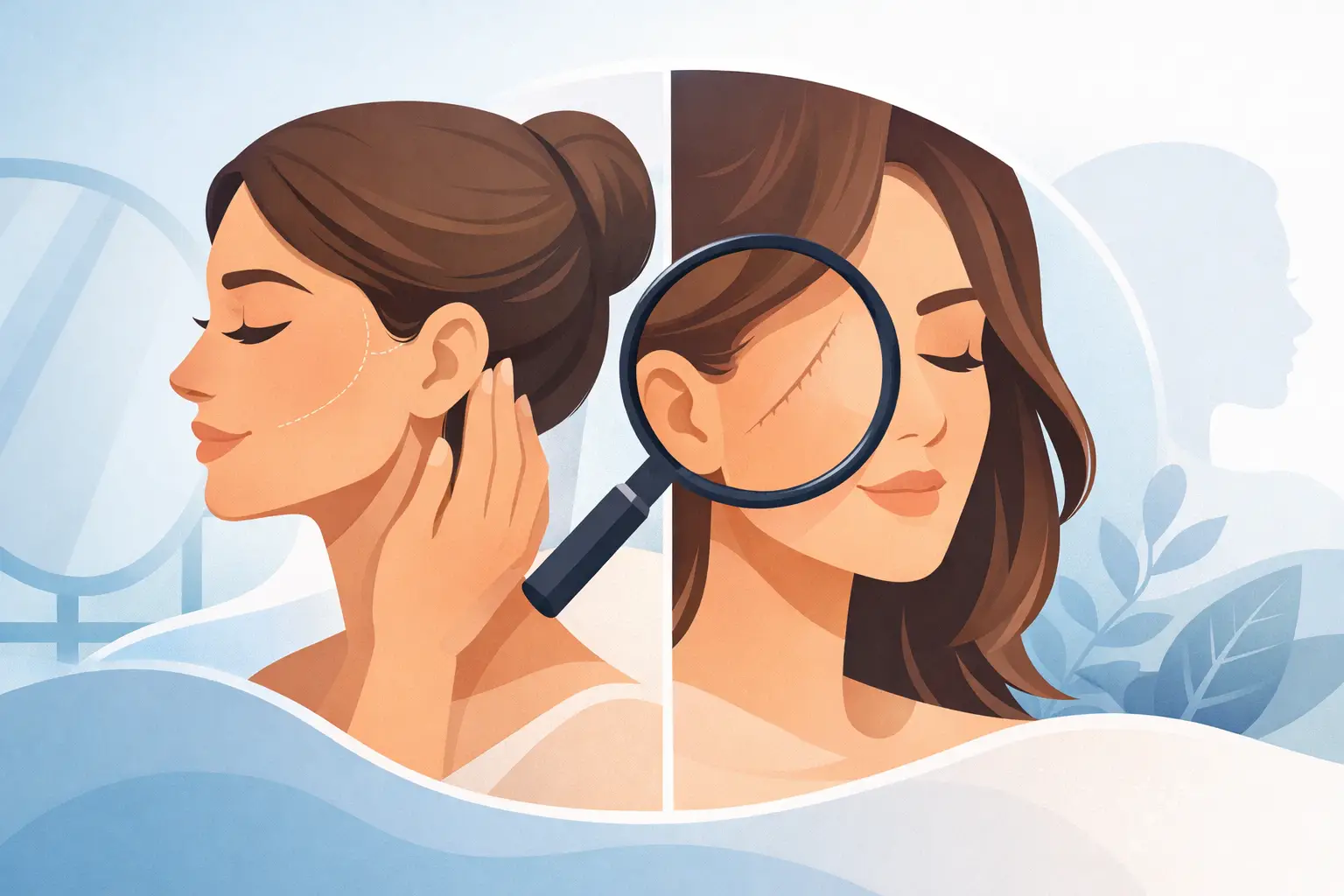
Most facelift scars can become remarkably inconspicuous, especially when the procedure is performed by a surgeon who specializes in facial rejuvenation. Incisions are typically positioned along the natural crease in front of the ear, around the earlobe, behind the ear, and into the scalp. Depending on the technique and the amount of neck correction needed, a small incision may also be placed beneath the chin.
These locations are not accidental. The ear has natural borders, shadows, and curves that help conceal a fine line. An incision placed just inside the hairline allows hair to provide further coverage. Behind the ear, the scar is generally hidden from ordinary face-to-face conversation, photographs, and daily social activity.
Still, every patient heals differently. A person with very fair, thin skin may see temporary pinkness more readily, while someone prone to hyperpigmentation may notice temporary darkening. Genetics, sun exposure, smoking history, skin quality, tension on the incision, and post-operative care all influence the final appearance. A responsible surgeon will explain these variables rather than offering a one-size-fits-all promise.
Where Facelift Incisions Are Usually Placed
A traditional facelift commonly uses an incision that begins near the sideburn or temple area, follows the front contour of the ear, curves around the earlobe, and continues behind the ear into the hair-bearing scalp. This gives the surgeon access to lift deeper facial structures, remove or reposition excess skin without pulling, and improve the jawline and neck.
A shorter-incision facelift may limit the length of the scar for selected patients with less skin laxity. It can be appealing, but a shorter scar is not automatically a better scar or a better result. If a patient has significant loose skin in the neck, an incision that does not adequately address that area may leave behind visible laxity. The right approach depends on your anatomy, goals, hairline, age-related changes, and the degree of correction you want.
For men, incision planning deserves particular attention. Facial hair and beard-bearing skin can make placement more complex, particularly in front of the ear. An experienced facelift surgeon plans around these details to preserve a natural appearance and avoid shifting beard growth into an unnatural location.
The Hairline Matters as Much as the Ear
Patients with a high hairline, thinning hair, or a history of hair loss should discuss this openly during consultation. When incisions are planned thoughtfully, they can be placed to avoid unnecessarily raising the hairline or making the scar difficult to cover. In some cases, the surgeon may recommend a different incision pattern based on the patient’s existing hairline and skin movement.
This is one reason before-and-after photographs should be reviewed carefully. Look beyond the overall lift. Ask to see the ear, sideburn, hairline, and neck area in well-lit images. A natural result includes details that hold up at close range.
What Facelift Scar Healing Actually Looks Like
In the first days after surgery, incisions are protected by dressings and are not a reliable indicator of the final result. Swelling, bruising, and mild redness are expected parts of the early recovery process. Most patients are understandably focused on comfort and healing rather than examining the line of every incision.
Over the first several weeks, scars may appear pink, red, or slightly raised. This does not mean something has gone wrong. Scar tissue is actively remodeling, and the body is sending blood flow and collagen to the area as it heals. At this stage, patience matters.
By approximately three to six months, many scars begin to soften and fade noticeably. Scar maturation continues for up to a year, and sometimes longer. A fine pale line is often the long-term goal, but the pace is individual. Someone attending a wedding or family gathering a few weeks after surgery may still need strategic hairstyling or makeup, while someone planning farther ahead may feel comfortable without camouflage.
It is also worth remembering that facelift recovery is not just about a scar. The face needs time for swelling to settle and tissues to adapt to their new position. Patients who allow themselves a proper recovery window tend to feel more relaxed and confident when they return to normal life.
How to Help Facelift Scars Heal Discreetly
The most meaningful decisions happen before surgery: choosing a qualified facelift specialist, following medical screening recommendations, and arriving in good health. Scar care after surgery then protects the surgeon’s work.
Follow your surgeon’s instructions precisely, particularly regarding cleansing, incision ointment, dressings, and follow-up visits. Do not apply silicone products, creams, makeup, or home remedies until your medical team says the incision is fully ready. Good scar care is not about using every product available. It is about using the right product at the right point in healing.
Sun protection is essential. Fresh scars can darken or remain red longer when exposed to ultraviolet light. Once your surgeon approves it, protect the incision areas with sunscreen, hats, and sensible avoidance of direct sun. This is especially relevant for patients recovering in warm climates or returning home to sunny weather.
Smoking and nicotine products can compromise circulation and delay wound healing. Patients should be fully candid about nicotine use, including vaping, patches, and gum, because the advice is based on safety rather than judgment. Nutrition, hydration, sleep, and avoiding activities that raise blood pressure too soon also support uncomplicated healing.
If a scar becomes increasingly painful, opens, drains, develops spreading redness, or changes unexpectedly, contact the surgical team promptly. Early professional evaluation is always better than trying to manage a concern alone.
Makeup, Hair, and Other Ways to Conceal Scars During Recovery
Camouflage can be useful while scars are still maturing, but it should never be rushed. Once the incisions are completely closed and your surgeon gives approval, a gentle, high-coverage concealer can reduce the appearance of lingering redness. Green-tinted corrector may help neutralize red tones before foundation is applied lightly.
Hair styling is often the simplest temporary solution. Wearing hair down, changing a part, or adding soft volume near the temples can cover healing areas around the ears. Avoid tight styles, hair coloring, extensions, or chemical treatments until your surgeon confirms they are safe. The scalp and incisions need time, and pulling at the hairline can create unnecessary tension.
For a small number of patients, a mature scar may remain more visible than expected. Depending on the concern, options can include silicone therapy, steroid treatment for raised scars, laser treatment, or scar revision. These decisions should be made only after sufficient healing time and a direct examination by a qualified professional. Treating a scar too early can be counterproductive.
Why a Supported Recovery Can Make a Difference
A quiet, well-organized recovery protects more than comfort. It gives patients the space to rest, attend follow-up appointments, take medications on schedule, and avoid the stress of rushing through airports or managing household responsibilities immediately after surgery.
For U.S. and Canadian patients traveling for treatment, this structure is particularly valuable. FaceLiftMexico coordinates a full-service hospital experience, transportation assistance, and recovery in a private 4-star retreat in San Miguel de Allende, so patients can focus on healing rather than logistics. A founder-led consultation helps ensure that questions about incision placement, scar concerns, and recovery timing are addressed before a patient makes travel plans.
A facelift scar is a small part of a much larger decision: selecting a surgeon, technique, and recovery plan that respect your face and your peace of mind. Give yourself permission to ask direct questions, review real results, and plan enough time to heal without pressure. The best scars are not created by hiding the truth about surgery, but by careful surgical planning, attentive aftercare, and the confidence to let healing unfold at its own pace.
0 comments