
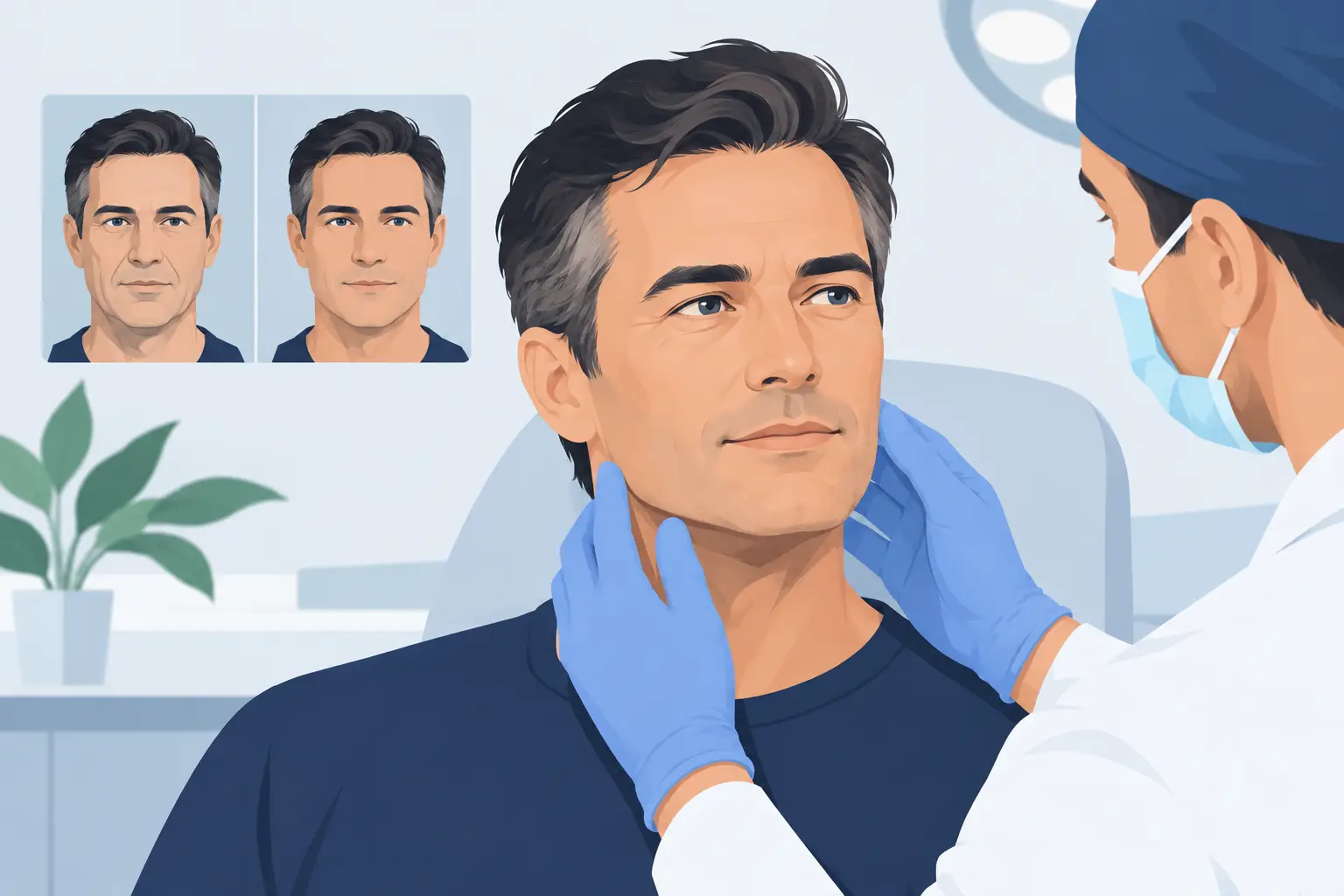
Can Men Get Facelift Surgery? What to Expect
A masculine face can show aging in ways that are difficult to hide: neck laxity under the jawline, deep folds beside the mouth, jowls that soften a once-defined profile, and a tired look that does not reflect how energetic you feel. So, can men get facelift surgery? Absolutely. Men are increasingly choosing facelift surgery because a well-planned procedure can restore a fresher, stronger facial appearance without making them look overdone or unrecognizable.
The key is not simply removing loose skin. A successful male facelift respects the features that make a face masculine: a firmer jawline, natural sideburn placement, facial proportions, beard-bearing skin, and the subtle character that comes with age.
Can Men Get Facelift Surgery Without Looking Feminine?
Yes. The concern is understandable, but it usually comes from seeing poorly planned procedures rather than from facelift surgery itself. A facelift does not have to create a pulled, overly smooth, or feminine appearance. In experienced hands, the goal is to turn back visible aging while preserving the patient’s identity.
Male facelift planning differs from female facelift planning. Men often want a clearer angle from the chin to the neck, less heaviness along the lower face, and a more rested appearance around the cheeks and eyes. They generally do not want exaggerated cheek fullness, sharply arched brows, or skin pulled tightly toward the ears.
A surgeon who specializes in facelift procedures considers the underlying muscle and connective tissue, not just the surface skin. Lifting and repositioning deeper facial layers can provide a more durable result with less tension on the skin. That approach helps maintain a natural expression and avoids the obvious signs of an overly tightened facelift.
What Makes a Male Facelift Different?
The basic surgical principles are similar for men and women, but the technical details deserve particular attention. Men’s skin is often thicker, their facial structure may be broader and more angular, and many have facial hair that affects incision planning.
Incisions Must Protect Natural Hairlines
Sideburns are an important masculine facial landmark. If an incision is poorly placed, a sideburn can be pulled upward or backward, making the surgery more noticeable. A skilled facelift surgeon plans incisions around the ear and hairline to keep them as discreet as possible while preserving a natural sideburn position.
Men with thinning hair or closely cropped hair may need a different incision strategy than men with thick hair. This is one reason an individualized surgical consultation matters more than a one-size-fits-all procedure plan.
Beard Growth Can Influence Healing
Men have beard-bearing skin in areas that may be repositioned during a facelift. Hair follicles can occasionally be moved closer to the ear after surgery, which means some patients may need to shave in a slightly different area. This is usually manageable, but it should be discussed before surgery rather than discovered afterward.
Men also tend to have a stronger blood supply to the face and thicker skin, which can affect bruising, swelling, and surgical technique. Smoking, nicotine use, uncontrolled blood pressure, and certain medications can raise healing risks for any patient, but they are especially important to address when planning facial surgery.
A Stronger Neck and Jawline Are Often the Priority
For many male patients, the neck lift portion of a facelift is as meaningful as the facial lift itself. Loose skin beneath the chin and vertical neck bands can make a man appear heavier or older than he feels. Tightening the deeper neck structures and refining the jawline can create a cleaner, more athletic profile.
The exact approach depends on anatomy. Some men need a full facelift and neck lift, while others may benefit from a lower facelift focused on jowls and neck laxity. In selected cases, chin enhancement, eyelid surgery, or facial fat transfer may complement the result. More treatment is not automatically better. The right combination is the one that addresses your concerns without changing your character.
Who Is a Good Candidate for a Male Facelift?
Age alone does not determine candidacy. Men in their 40s may seek treatment for early jowling or a loose neck, while men in their 60s, 70s, and beyond may want more comprehensive correction. What matters most is the degree of skin laxity, the condition of the deeper facial tissues, overall health, and realistic expectations.
A good candidate is medically stable, understands that surgery requires recovery time, and wants a natural improvement rather than a different face. Men who have maintained a stable weight and do not smoke or use nicotine generally have a more favorable healing environment.
During a proper consultation, the surgeon should review your medical history, medications, prior surgeries, and goals. Clear photos or a video consultation can help begin the process, but an in-person assessment before surgery remains essential. An ethical surgeon may also advise against surgery if the likely benefit does not justify the risk or recovery.
Recovery: What Men Can Realistically Expect
A facelift is not a lunchtime procedure, and recovery should not be rushed. Most patients experience swelling, bruising, tightness, and temporary numbness during the early healing period. The first week is usually focused on rest, wound care, medication, and follow-up. By the second week, many patients feel comfortable being seen in public with strategic planning, although residual swelling can continue for several weeks.
Final refinement takes time. The face settles gradually as swelling resolves and tissues adapt to their new position. Men who are accustomed to being active often find the required downtime challenging, but protecting the result is part of the investment. Heavy exercise, alcohol, smoking, and sun exposure should be avoided according to the surgeon’s instructions.
For patients traveling for surgery, recovery support is not a luxury detail. It is a practical safety consideration. You need dependable transportation, a comfortable place to rest, access to post-operative care, and enough time near your surgical team before flying home. Trying to manage a hotel, meals, dressings, and transportation alone while recovering is unnecessary stress.
Planning a Male Facelift in Mexico
Mexico can offer meaningful savings for U.S. and Canadian patients, often without accepting lower standards of care. However, price should never be the only deciding factor. The right question is not, “How inexpensive is the surgery?” It is, “Who will perform it, where will it be performed, and what support will I receive before and after?”
Look for a facelift-focused surgeon with verifiable credentials, substantial experience in facial surgery, and before-and-after results that show natural male outcomes. Surgery should take place in a properly equipped full-service hospital, not an informal setting. You should also understand what is included in the quoted cost: surgeon’s fee, anesthesia, hospital care, medications, follow-up appointments, transportation, and recovery accommodations.
FaceLiftMexico has organized facelift journeys for international patients since 1994, pairing surgery in a full-service hospital with private transportation assistance and recovery in a 4-star retreat in San Miguel de Allende. This type of coordinated arrangement can be particularly valuable for men who want privacy and straightforward logistics rather than the burden of arranging each part of their care independently. Financing options may also help qualified patients plan treatment without delaying a procedure they have carefully considered.
A quality medical travel experience should never feel rushed or impersonal. Before committing, ask who will be available if you have a question after surgery, how many days you should remain in the area, what happens if an unexpected issue arises, and when it is safe to travel home. Clear answers are a sign of an organized, patient-centered program.
Choosing Results That Still Look Like You
The best male facelift results rarely announce themselves. Friends may say you look rested, healthier, or as though you have lost weight. They should not immediately see the surgery. That understated outcome comes from careful planning, an experienced facelift specialist, and a recovery period that is given the respect it deserves.
If your reflection looks more tired than you feel, a thoughtful consultation can clarify whether facelift surgery is the right next step. The objective is not to erase every line. It is to bring back a version of your face that feels familiar, confident, and fully your own.
0 comments